
Australia’s mining industry is entering an era where operational infrastructure is becoming as strategically important as the resource itself.
Australian mining has traditionally focused on the next opportunity: the next deposit, expansion or major capital project.
Yet spending patterns point to a shift. As mining companies navigate rising costs and greater pressure on capital allocation, investment is increasingly directed towards lower-risk opportunities around existing operations. Brownfield exploration continues to outpace greenfield activity nationally, reflecting a growing preference for extracting more value from assets already in place.
That approach now extends beyond exploration. Operators are now asking whether existing infrastructure can continue delivering safe, reliable production, or whether replacement is the only option.
The answer is reshaping how the industry approaches asset integrity, maintenance and long-term investment: Asset life extension is no longer simply a maintenance exercise; It’s a strategic business decision.
Extending Asset Life Beyond Yesterday’s Needs
Many of Australia’s major mining assets were constructed decades ago. Few were expected to remain in service for as long as they have.
But operations evolve. Mine lives are extended; new deposits are discovered and production targets change. Because of this, infrastructure is increasingly being asked to perform well beyond its intended lifespan.
As Nathan Barrett, Pilbara East Area Manager at Duratec, explains:
“A lot of these facilities were built with a life expectancy of 15 to 20 years, but then operators find another deposit right next door and suddenly they’re asking that same infrastructure to keep performing. That’s why preventative maintenance has become so important.”
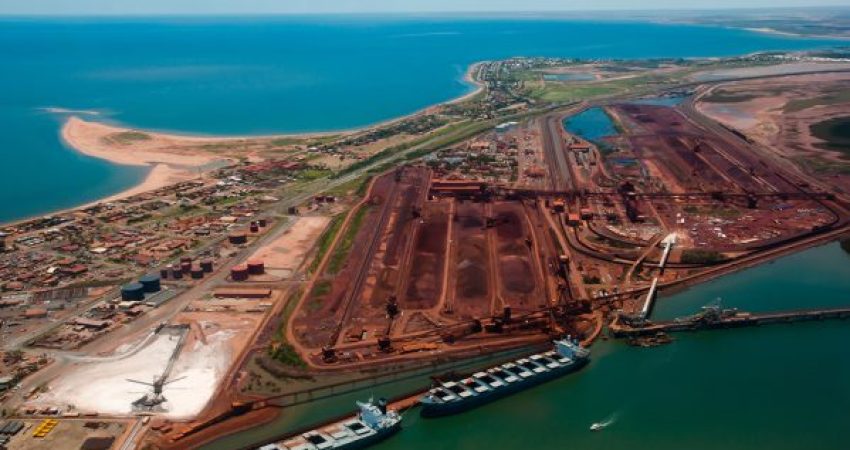
This reality is driving investment in infrastructure remediation. In the Pilbara, asset owners are renewing critical infrastructure such as BHP’s Under Harbour Tunnel and Berth C&D facilities rather than pursuing wholesale replacement. Similar programs are being undertaken across fixed plant, shiploaders and structural infrastructure, maximising the value of existing assets before committing to major replacement capital.
Reliability Is Becoming a Competitive Advantage
Historically, production growth was associated with building new capacity. Today, it increasingly depends on maintaining the reliability of existing capacity.
This requires a detailed understanding of asset condition and risk. The industry is moving from reactive maintenance towards condition-based asset management supported by inspection technologies, non-destructive testing (NDT), digital monitoring and data-driven decisions.
For Aaron Kaeding, General Manager of NDT at MEnD (Duratec Group), effective decision-making begins with quality information:
“You can’t make informed decisions without data. If you do, you’re essentially guessing. Inspection shouldn’t be viewed as a cost, but rather an investment; an investment that assists in extending the life of an asset.”
Condition intelligence helps operators understand residual asset life, identify emerging risks, prioritise maintenance and make informed repair-or-replace decisions. As infrastructure ages, the operators with the clearest understanding of their assets are better equipped to direct capital towards the greatest operational value.
The Cost of Deferred Intervention: ‘Defect Debt’
In periods of cost pressure, maintenance spending can be an easy target for deferral. The challenge is that deterioration rarely waits for future budgets.
Corrosion, structural degradation and coating failures are progressive. Left untreated, they can escalate from manageable tasks into major infrastructure remediation programs, operational disruptions or asset failures.
This risk is particularly relevant for exposed coastal and marine infrastructure. Rio Tinto’s Gove Wharf Remediation works demonstrate how targeted remediation can support continued asset performance without defaulting immediately to full replacement.
Across the industry, accumulated maintenance, or ‘defect debt’, remains a significant driver of long-term risk. Small defects accumulate, priorities shift and temporary repairs become permanent. Eventually, intervention becomes unavoidable and more expensive.
Asset condition is rarely static. The longer intervention is delayed, the more limited the available options become.
Looking Beyond the Defect
Modern asset management is moving away from treating symptoms and towards addressing root causes.
Corrosion, coating failure and structural degradation can indicate wider environmental or operational issues. Salt exposure, humidity, washdown practices, housekeeping and processing environments may all accelerate deterioration. Repairing visible defects without understanding their cause can lead to recurring problems and ongoing expenditure.
Effective asset integrity strategies focus not only on what is happening, but why. This requires experience and technical expertise, helping operators identify sustainable, long-term improvements rather than relying on repeated reactive interventions.
Why Partnership Matters More Than Ever
While technology and condition intelligence are increasingly important, successful infrastructure strategies still rely on people. Mining companies need partners who can inform lifecycle decisions, not simply deliver isolated scopes.
As Ryan Rogers, North Queensland Operations Manager at Duratec, observes:
“What asset owners really want is a contractor like Duratec, that comes to them with solutions to the problem, not just the problem itself.”
Integrated inspection, engineering and remediation input is what turns asset condition information into practical options. For asset owners, the value of a partnership is not simply in identifying defects, but in understanding the operating constraints around them and developing solutions that support safe, reliable production.
The Port of Townsville Berths 1 & 11 Fender Change-Out project reflects this approach. Delivered across critical operating infrastructure, the works show how staged intervention, access planning and specialist execution can help maintain operational continuity while preserving long-term asset performance.
Trust is equally important. As Nathan Barrett explains: It’s a partnership. You work with them, not against them.”
The strongest outcomes are achieved when operators combine local knowledge, technical expertise and long-term collaboration to develop practical solutions aligned with operational goals.
Brownfield Before Greenfield
Australia’s mining sector is entering a new phase. Operations are being extended, infrastructure is ageing and capital is becoming more disciplined.
As Robbie Annetts, Operations Manager at Hunter Coatings (Duratec Group), explains:
“The operators we see succeeding are the ones that understand asset condition, that manage risks proactively, that address the root causes and that build partnerships capable of supporting informed decision-making in the long run.”
The next era of Australian mining will not be defined solely by what gets built. It will also be defined by how effectively operators protect, renew and optimise the infrastructure already supporting production.
In a capital-disciplined market, brownfield is increasingly coming before greenfield, and the smartest investment decision may already be standing on site.
If ageing infrastructure is constraining reliability, competing for capital or raising asset life extension questions, the first step is understanding its true condition. Duratec helps mining and industrial operators assess asset integrity, identify causes of deterioration and develop practical remediation strategies that support safe, reliable and longer-term performance. Find out more about our end-to-end asset life extension and upgrade services.
