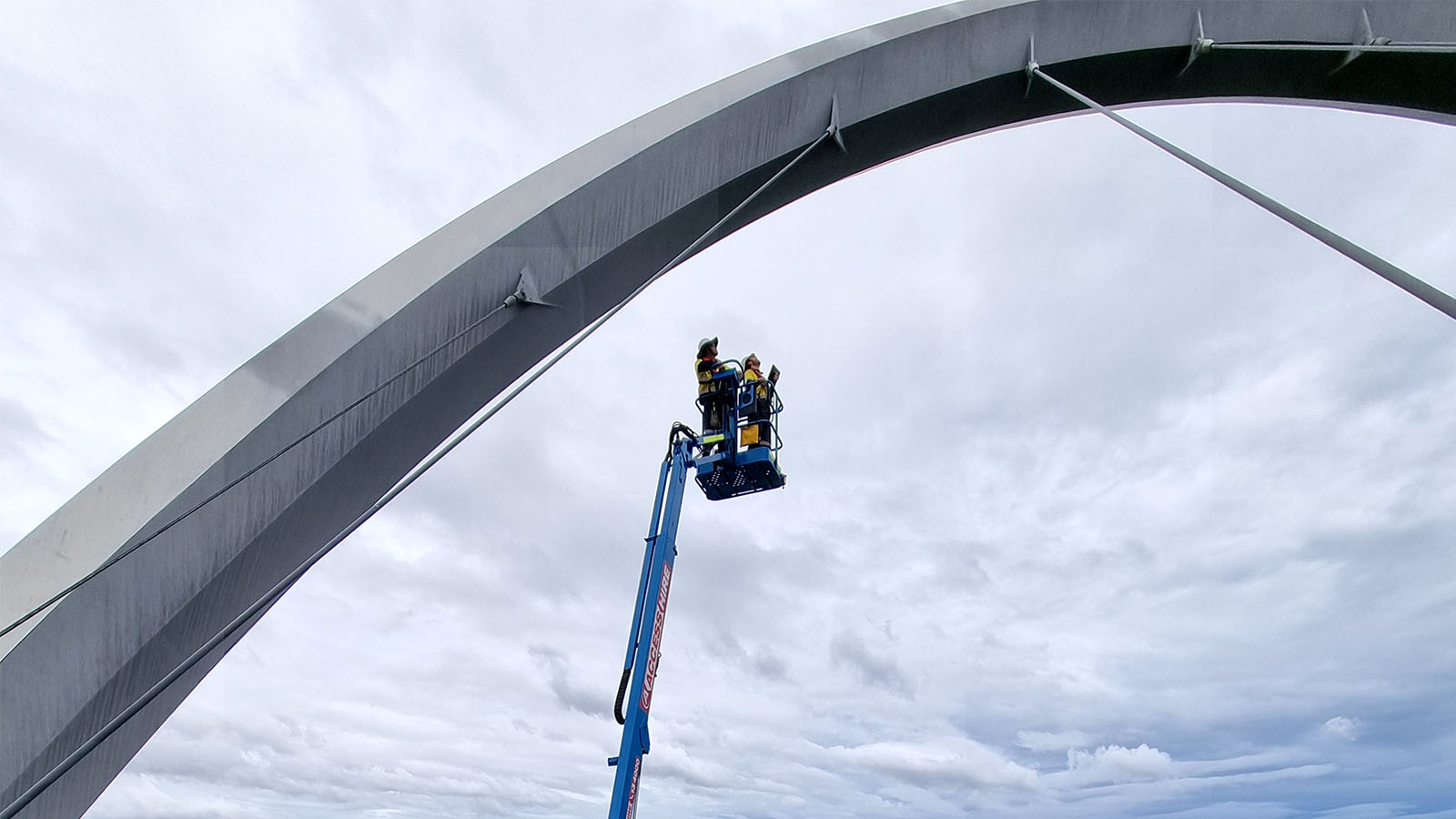
MEnD Consulting leads a high-stakes inspection of one of Perth’s most iconic links, Elizabeth Quay Pedestrian Bridge.
Since opening in 2016, the bridge has become a vital link for Perth’s walkers and cyclists. But even the most elegant structures require a health check. MEnD Consulting were tasked with leading a comprehensive structural inspection of the bridge as part of its handover from DevelopmentWA to the City of Perth.
“This wasn’t just a visual once-over from the ground,” said Garon Deutsch, Technical Manager at MEnD. “We were there to inspect every detail, up close and at height.”
Hands-on and at height
Engaged by CBRE, MEnD prepared for a full-scale inspection. They had to remove timber decking, expansion cover plates, and even had to access pier connections to get a close look at the bridge’s structural condition.
The inspection followed Main Roads WA’s Level 2 guidelines, which requires close visual assessments and condition ratings for every structural element. But the sweeping arches and tension cables of this iconic bridge, demanded more than the standard checklist.
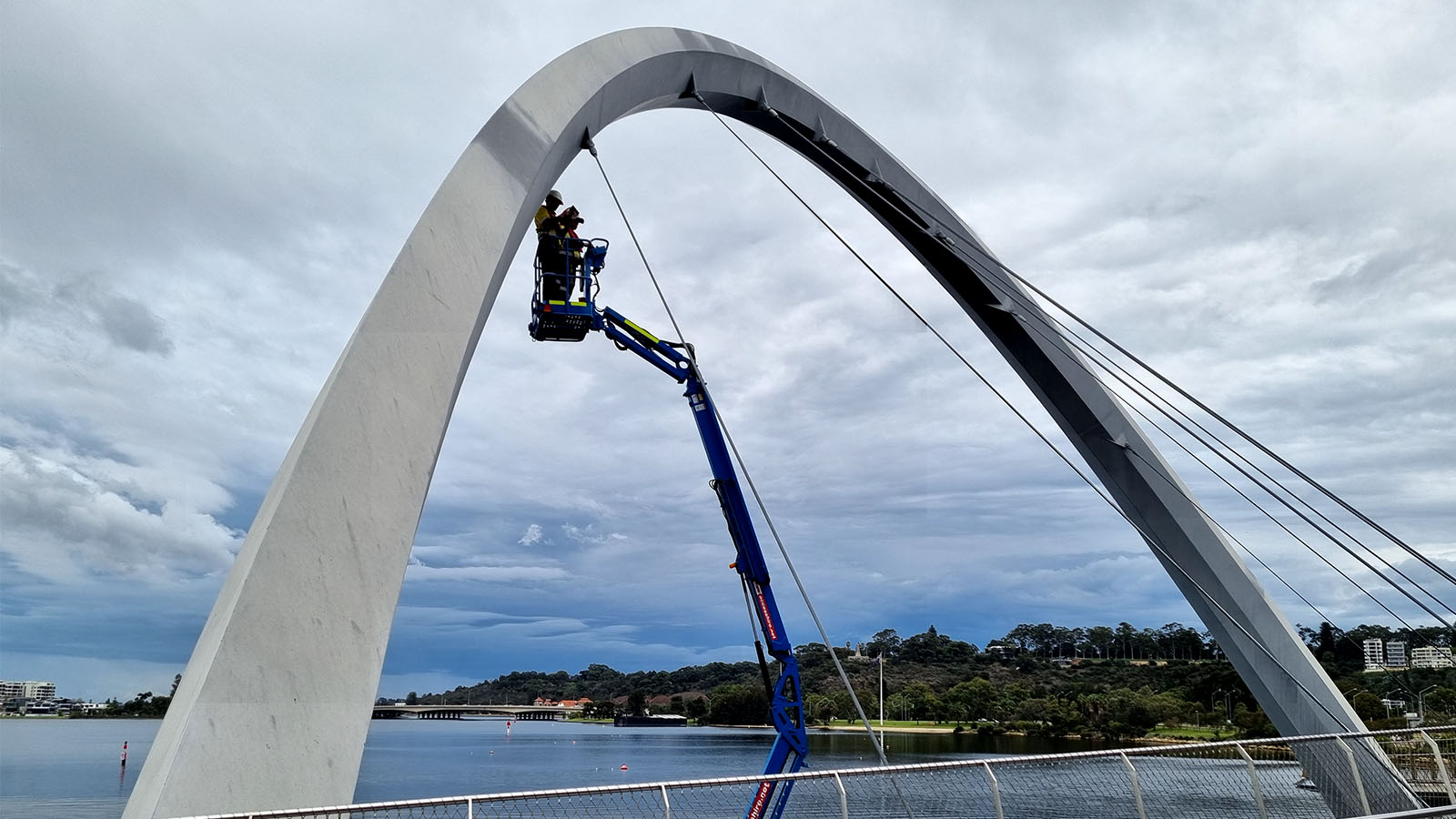
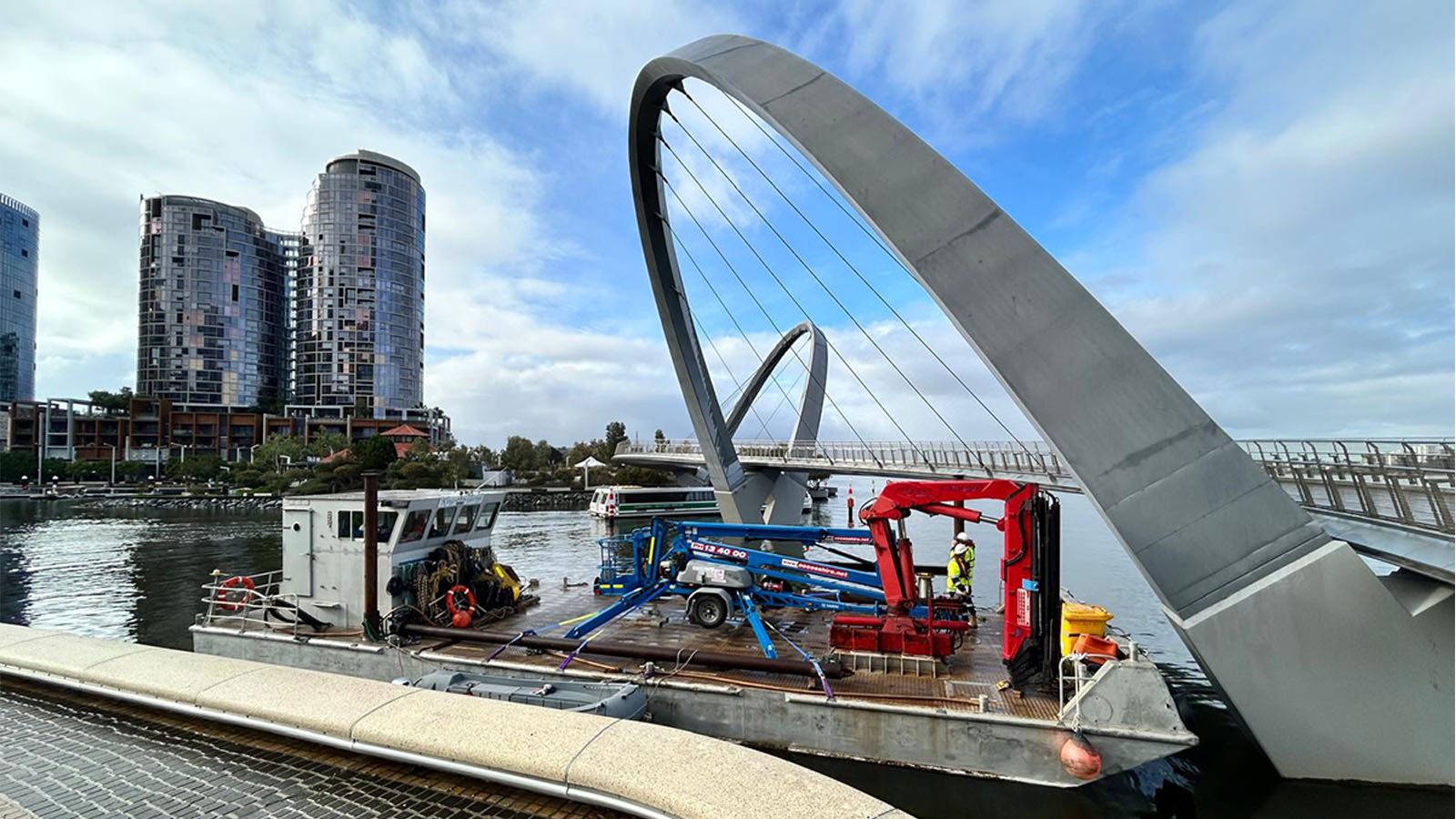
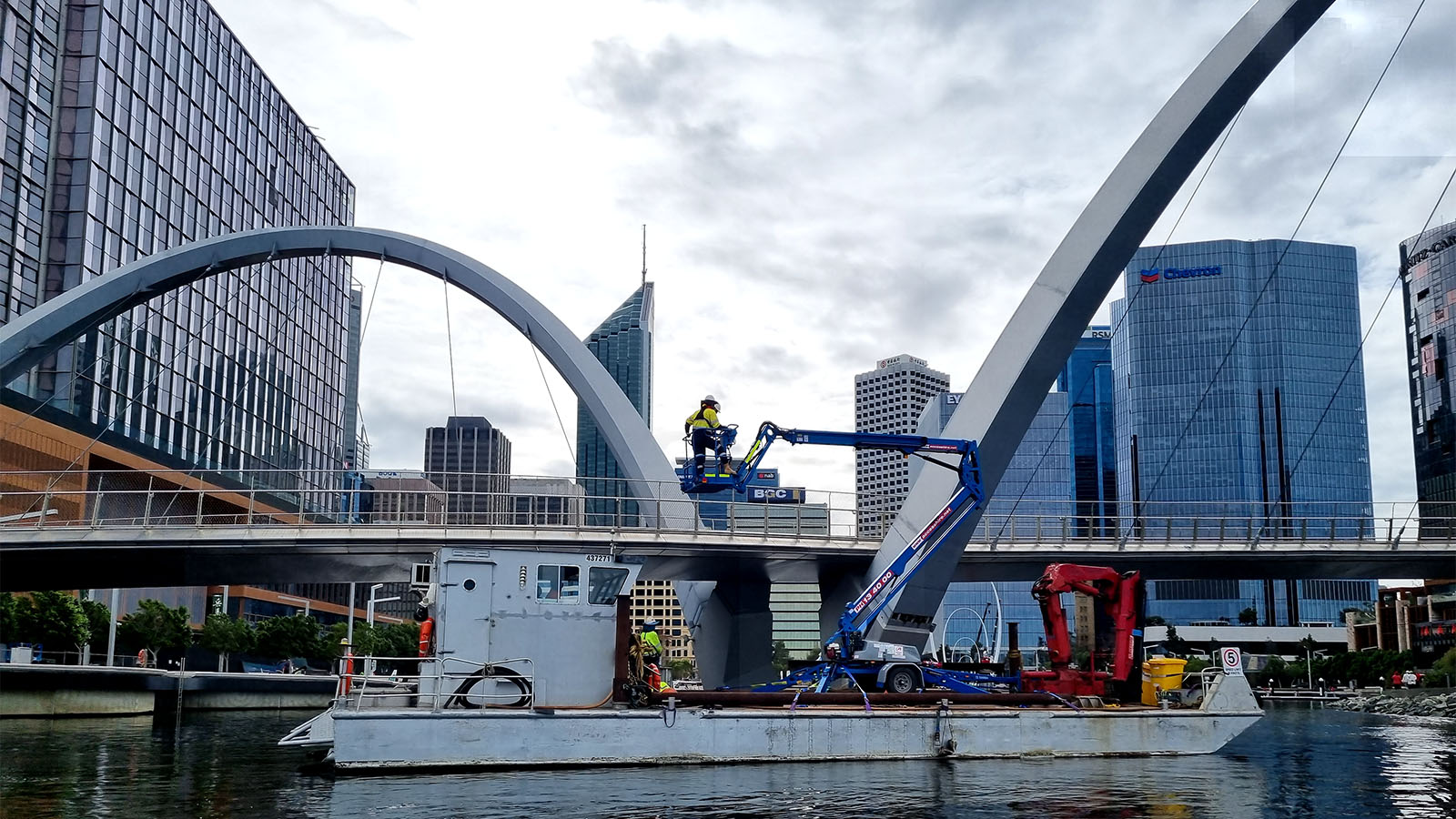
To reach the hard-to-access tension cable connections and remove the pier cover plates, the team brought in an elevated work platform (EWP) mounted on a barge. This deployment required precision planning and a steady hand, especially for working 15 metres above the water line.
“Any wake from passing boats could cause serious movement while we we’re working at height” adds Garon.
A flying photo shoot
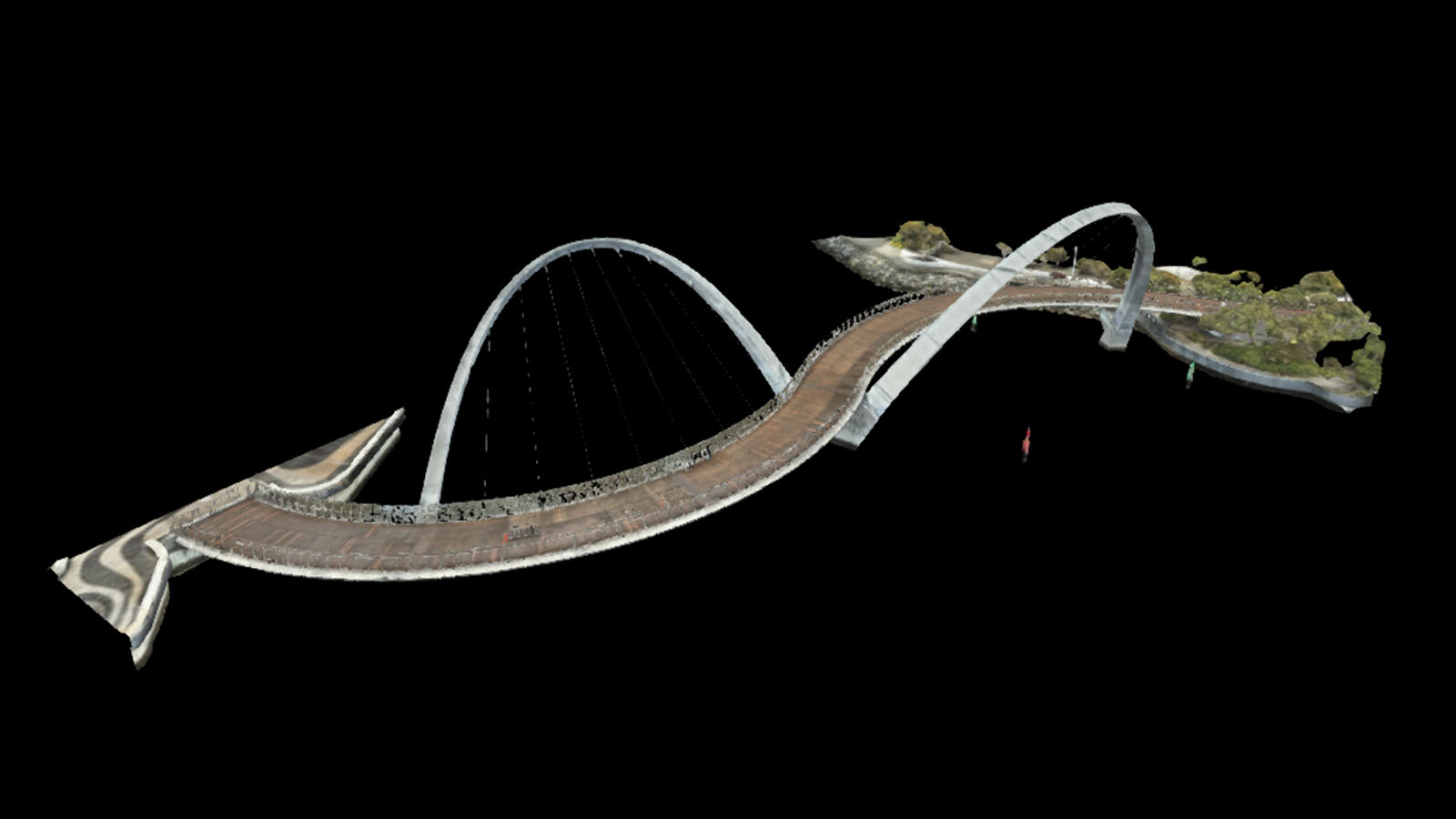
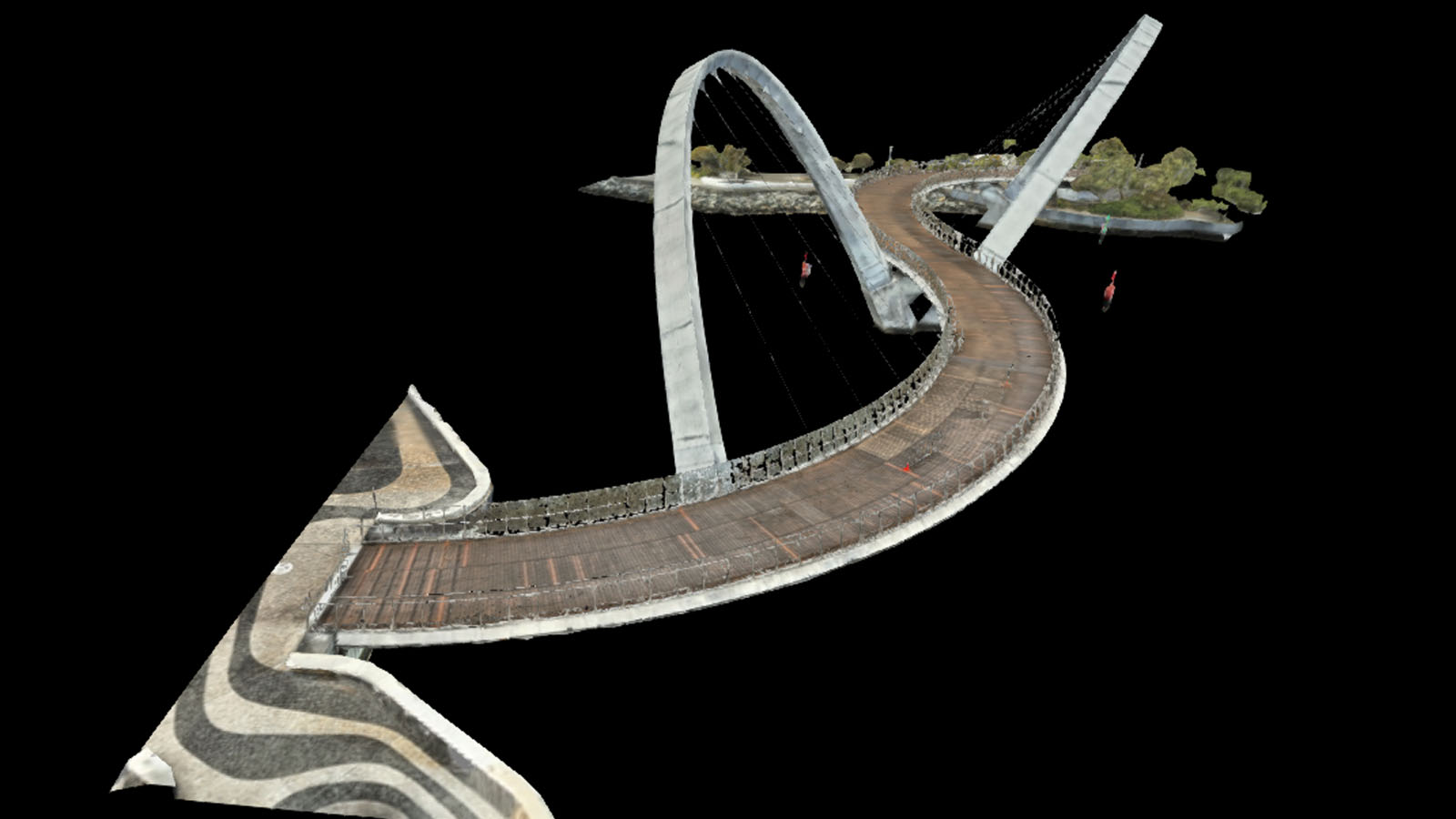
Before any boots boarded the bridge, MEnD launched drones into the sky above for a six-hour systematic flight that captured high-resolution imagery. The thousands of images were then stitched together into a high-resolution 3D photogrammetry model.
“The model was a game changer,” said Garon. “It helped us plan the inspection, visualise key areas, and communicate clearly with stakeholders, without needing to be on site.”
Originally planners and partnership
Despite their expertise, MEnD didn’t carry out the inspection alone. ARUP, the original designers of the bridge, supported the efforts, bringing with them invaluable access to original design documentation and maintenance records.
“Having ARUP on board streamlined everything,” commented Garon. “They knew the bridge inside and out and brought vital insight to the table.”
Waterways, wake, and wandering tourists
Conducting an inspection in the middle of a busy public space came with its own set of challenges. The bridge sits in a major navigational channel and needed meticulous coordination with the Public Transport Authority, private ferry operators; issuing a ‘Notice to Mariners’ was essential.
“We had to plan months in advance,” Garon revealed. “Managing public access, coordinating closures, and keeping everyone informed, it was a logistical puzzle.”
A spotter vessel was deployed to monitor marine traffic, and the bridge was fully closed during each stage of the inspection to ensure public safety.
Three-fold plan
The inspection unfolded in three key phases:
- Drone survey and 3D modelling (2–3 months prior)
- Ground-accessible inspection, including deck removal (three days)
- Barge-based inspection using the EWP (three days, plus mobilisation)
Each stage was carefully coordinated to minimise disruption while maximising safety and efficiency.
What’s next for the bridge?
While the specific findings remain under wraps, MEnD is now compiling a list of prioritised maintenance recommendations and further investigations.
These will help ensure the bridge continues to serve as a crucial link between The Island, the Western Promenade, and Williams Landing.
A success and a selfie
The technical success of this project reinforced MEnD’s reputation for tackling complex condition assessments with flexibility and precision.
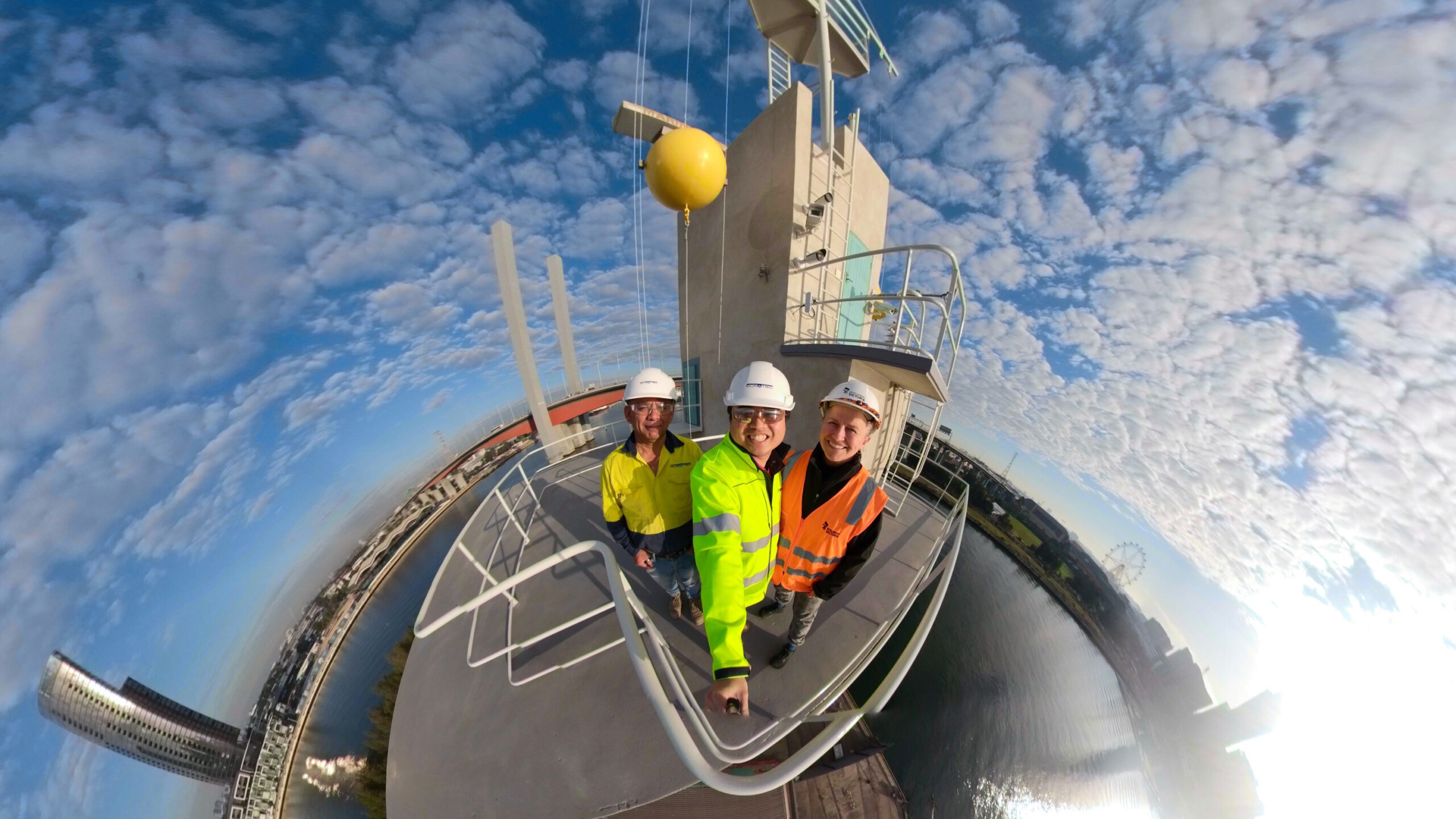
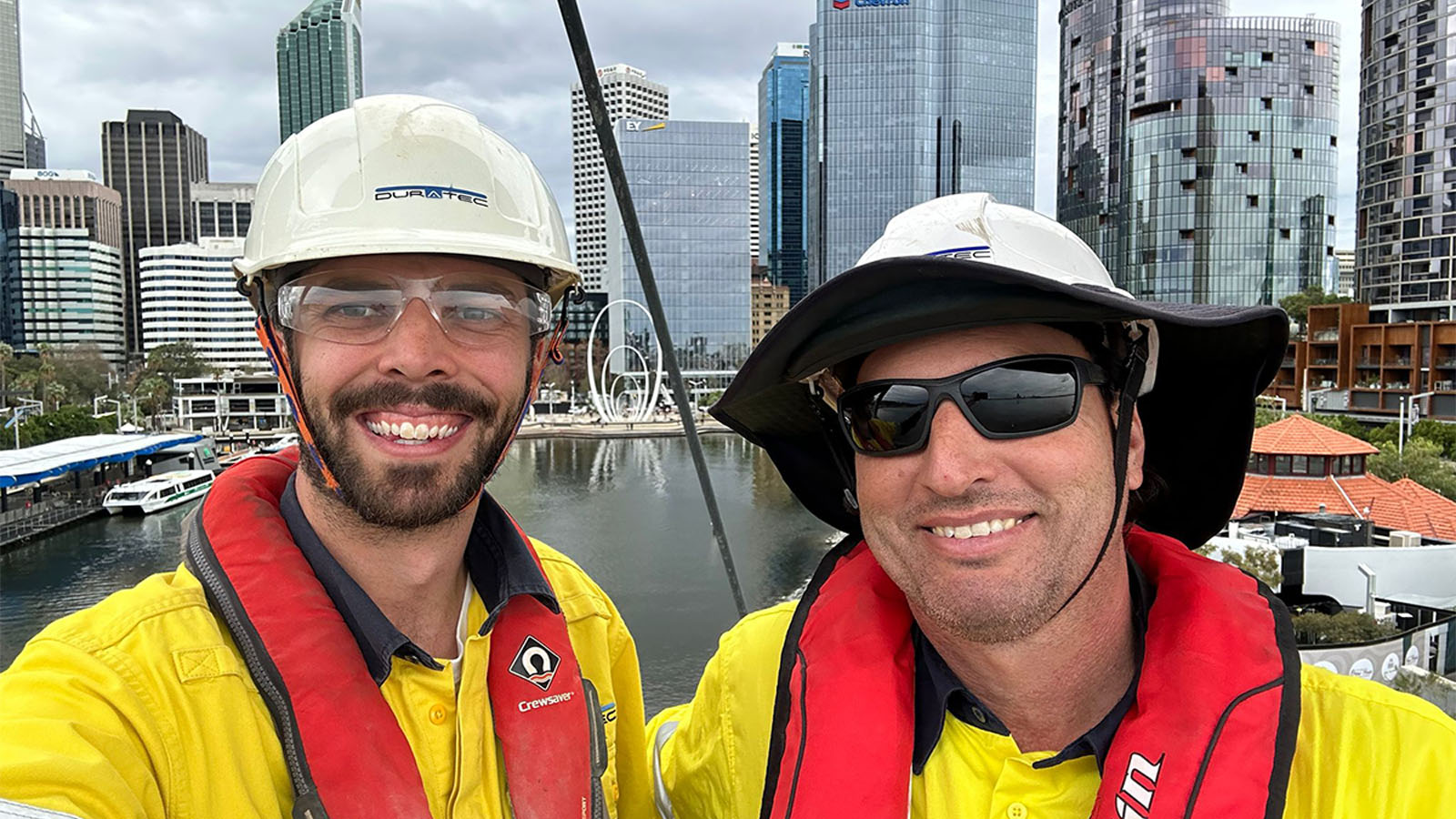
“It showed we can be hands-on, adaptable, and deliver valuable insights,” said Garon. “And yes, getting a selfie at the top of the arch was definitely a highlight.”