Specialist access systems to enable safer and smarter wharf remediation
BHP’s Berth C&D on Finucane Island in Port Hedland are heavy-duty export wharves used to load bulk carriers with iron ore. These large marine wharf assets required structural remediation and improvements to allow for easier future maintenance works. It was important to BHP that the work was carried out while maintaining uninterrupted operations of the wharf.
As part of the structural remediation works, defects to Berth C&D were repaired including steel piles, steel members and concrete headstocks. Additional works included the fabrication and installation of a new raw water line and hose connection points, approach jetty and maintenance jetty crack repair and demolition of two access landings. We also installed and maintained protective systems throughout the project to mitigate the risk of dust and debris falling into the water or escaping into the atmosphere.
Drawing on diverse inhouse capabilities, Duratec engaged MEnD, our digital asset management consultancy, to utilise their modelling technologies to create a detailed 3D model of the Berth. We then used the modelling to design and engineer specialist access systems for the required areas.
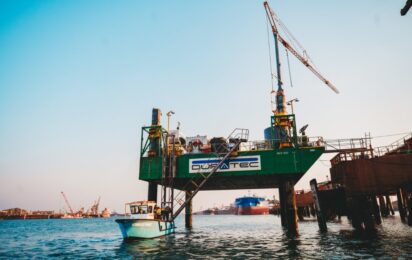
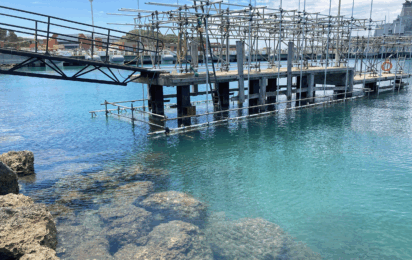
Sixteen specialist access systems were required to access the project’s unique geometry, such as the steel piles and along pipework. Rope access teams and marine vessels tackled the confined and difficult areas that the scaffolding couldn’t reach. All our specialist access systems allowed for large tidal swings of up to eight metres and were supported by our 100 tonne jack up barge. This allowed wharf operations to continue as the access systems could be moved out of the path of berthing ships.
As requested by BHP, we were able to carry out the work while operations continued. Our diverse specialist access systems meant we could work around challenging coastal conditions rather than fighting against them.
The project team delivered a high-integrity, future-ready asset for BHP with a works completion rate of more than 90% in critical shutdown scenarios.