Nishant Agarwalla, Manager of Offshore Projects at WPF, reflects on delivering a complex offshore campaign in a challenging environment.
WPF’s HJV Fender Remediation Campaign was completed at the end of 2025 and saw off- and onshore teams collaborate in a highly precise access system installation. This campaign marks a significant milestone for WPF as a critical step forward into the decommissioning sector as well as a step further into a positive relationship with major global energy supplier, Santos.
For Nishant Agarwalla, Manager of Offshore Projects at WPF, the project stood out for its complexity rather than scale.
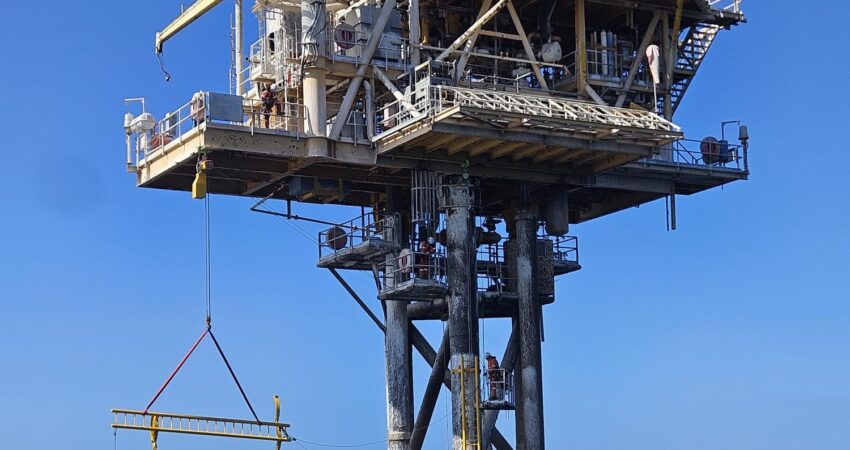
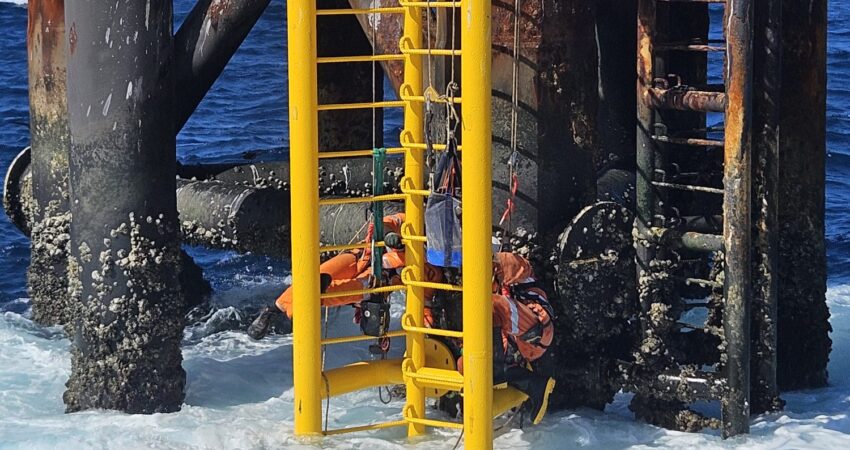
“This was a very challenging offshore environment. We were dealing with ageing platforms, degraded access, limited power, and people working very close to the waterline, all without the option of using offshore cranes,” Nishant shares.
These assets were no longer safe to access and without essential remediation, Santos could not progress with further preparatory activities prior to final decommissioning.
The overall scope required WPF to remove and replace the ladders and fenders on three offshore platforms.
The scope showcased WPF providing its full self-perform capabilities:
- Engineering & designing the new fenders and ladders
- Procuring materials from around the world, fabricating, testing and surface treatment across a compressed schedule
- Removing all of the redundant fenders and ladders and install the new designed fenders and ladders
- Delivering in a high‑risk environment
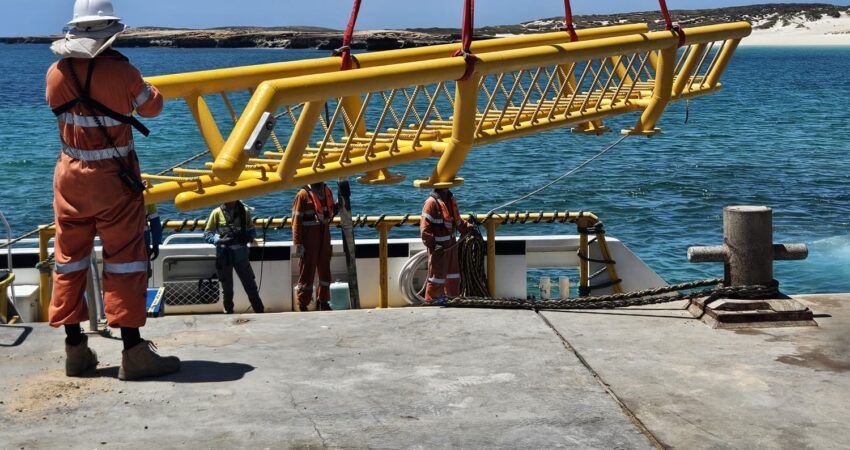
- The absence of cranes on both the platforms and the supply vessels fundamentally shaped the project approach. Traditional lifting, scaffolding and access solutions were simply not available.
Nishant adds, “normally we would lift these structures using cranes. In this case, there were none. The question became how do we execute this campaign safely with what we do have?”
Compounding the challenge were under‑deck lifts, exposure to the sea and weather conditions, and the inherent risks of lifting operations offshore. Personnel safety was the dominant risk throughout planning.
“Any offshore lift carries risk, but when you’re working on ropes and near the waterline, safety becomes absolutely critical. That drove every decision we made,” Nishant reveals.
Engineering led solutions
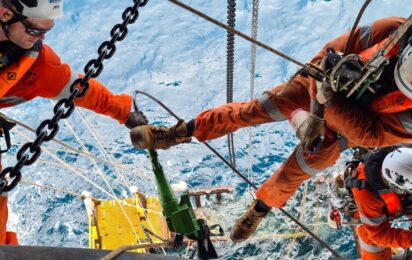
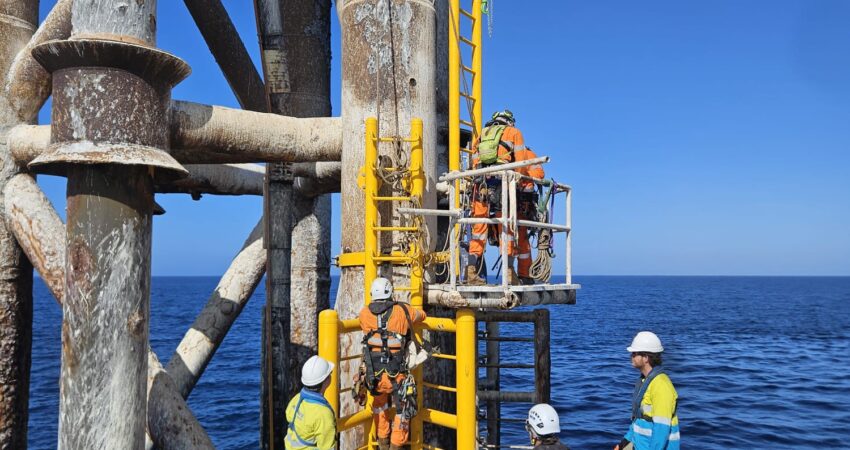
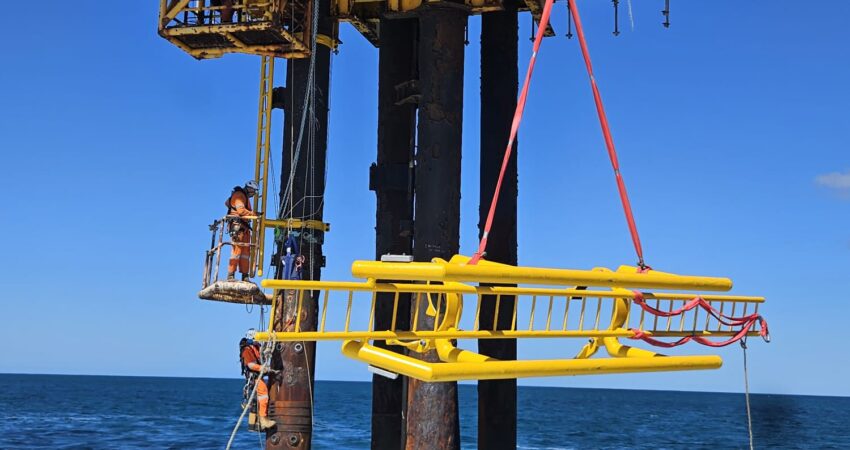
WPF worked closely with Santos to develop bespoke methodologies that prioritised safety while remaining practical to execute. The solution relied on rope access techniques and winching systems mounted beneath the platforms, supported by detailed engineering checks and risk assessments.
Design iterations focused on controlling component weight, ranging from one to two tonnes, so lifts could be performed using low‑complexity equipment, minimising personnel exposure and mechanical risk.
WPF carefully planned the lifts and subsequent installation around tidal windows and favourable weather, allowing sections normally below the waterline to be accessed during low tides without introducing diving activities or additional hazards.
“It was about understanding the constraints, then engineering a solution that kept people as safe as possible.”
Safe execution on and offshore
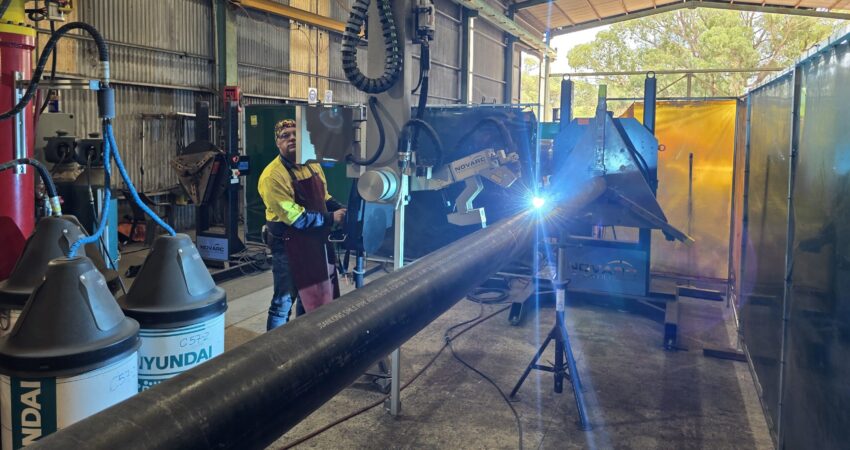
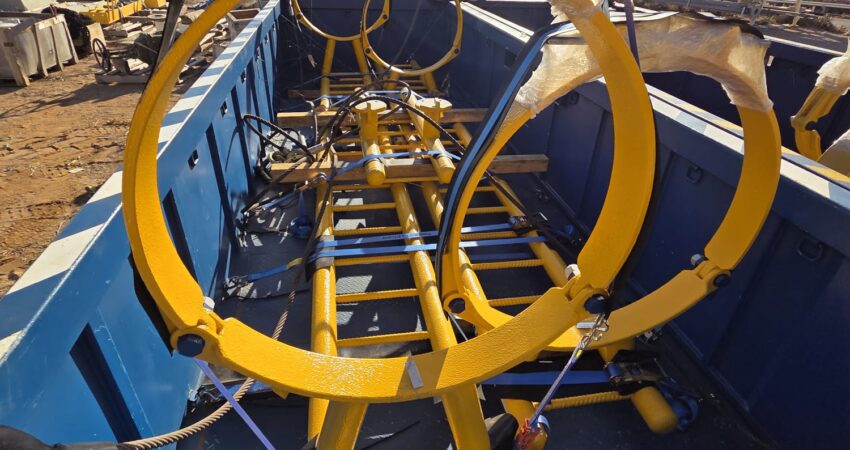
The offshore execution was delivered by rope access teams supported by onshore engineering and fabrication crews in Western Australia. To help accelerate the fabrication and to align with particular favourable tides, WPF utilised their Naval Base workshop on around the clock shifts to fabricate, test and paint the ladders and fenders; deployment of a Spool Welding Robot helped streamline the process and ensure full weld compliance.
The onshore teams manufactured the new ladder and fender access systems under tight timeframes. Coordination between teams was critical to maintaining safety and schedule.
Nishant adds, ‘We worked closely with our engineers and then applied our execution expertise offshore. Developing the methodology and then delivering it safely was where the team really performed.”
The campaign progressed safely with all activities sequenced to mitigate lifting risk, access constraints and environmental conditions.
Positioning WPF for decommissioning growth
Beyond restoring access for Santos, the project demonstrated WPF’s capability to deliver offshore solutions reliably and safely. This capability will become increasingly relevant as offshore decommissioning activity across Western Australia increases.
“This project showed Santos and the wider energy industry that we can take a loosely defined problem, engineer the right solution, and execute it safely offshore. That builds confidence and trust,” Nishant adds.
As decommissioning becomes a growing focus across the industry, the experience gained on the HJV Fender Campaign strengthens WPF’s position to secure repeat and expanded decommissioning work.
A moment of pride
The lasting campaign takeaway for Nishant was the performance of the team:
“What I’m most proud of is the professionalism offshore. The planning, communication and commitment to safety were outstanding. In a very challenging environment, the team did exactly what was needed to manage risk and deliver the work safely and that’s something to be genuinely proud of.”
The successful delivery of the campaign reflects six months of detailed engineering, planning and fabrication, resulting in safe, tailored solutions in a demanding offshore environment. This work firmly positions WPF as a trusted enabler in Western Australia’s rapidly expanding decommissioning sector.
With the successful 2025 campaign complete, WPF have now be requested to fabricate new ladders and fenders and complete offshore replacement activities on a further three platforms in the remainder of 2026.